I am hoping to update each week with an easy math game that can be played at home to practice and improve math skills. Most of the games can be played with number cards (cards labeled with 0-9 and a dot pattern) or with a deck of face cards with the King, Queen, Jack and Joker removed.
Addition War:
Divide the cards into 2 piles. Each person flips over the top two cards and adds them together. Then the person with the highest sum or total gets all 4 cards. For example, player 1 gets 5 + 7 = 12. Player 2 gets 3 + 6 = 9. So player 1 takes all 4 cards and sets them aside. If there is a tie, both players flip over their next two cards and the winner of that round takes all 8 cards.
Keep playing until cards in your pile are gone. Then count how many cards each person collected. The person with the most cards wins.
Subtraction War:
Divide the cards into 2 piles. Each person flips over the top two cards and subtracts the smaller number from the bigger number. Then the person with the highest answer gets all 4 cards. For example, player 1 gets 7 - 5 = 2. Player 2 gets 6-3 = 3. So player 2 takes all 4 cards and sets them aside. If there is a tie, both players flip over their next two cards and the winner of that round takes all 8 cards.
Keep playing until cards in your pile are gone. Then count how many cards each person collected. The person with the most cards wins.
Thursday, September 1, 2011

Make Ten Concentration
Use number cards 0-10 (or face cards with J, Q, K and Joker removed). Place cards face down. Turn two cards over. If the numbers add to make ten, you keep the pair. If not, flip them face down again. The second person then goes, trying to make ten. Continue playing until all the pairs of ten have been matched up and all cards are gone. The winner is the player with the most cards.
Tuesday, March 15, 2011
Family Literacy Night Notes
I helped plan and run a family literacy night at our school last week. It was a great success and a lot of fun. We had classes for families, a "book walk" (like a cake walk but the winners got free books) and a library open house. There were free cookies to decorate at the end. It was a great celebration.
Here are the notes from the class I taught about reading aloud to your children and shared reading. There is a lot more I could have said, but this is a good summary:
Benefits of reading: (Why read aloud?)
In a research article, titled What Reading Does for the Mind, the following benefits were found for reading:
*You become a better reader.
*You have a larger vocabulary.
*It usually improves your spelling.
*It increases your knowledge about the world and your practical knowledge (day to day living).
*It improves your ability to speak and communicate.
*It increases reading comprehension.
*It can improve IQ and make you smarter.
*It slows the process of aging and decreases memory loss.
Plus, reading is FUN!!! And reading together with your child helps them be more successful in school but also strengthens your relationship with your child.
How do I read aloud?
**Read in your native language.
**Have your child sit close to you.
**Choose a book that you’ll both enjoy (perhaps take turns picking.)
**Stop after a few pages to talk about the book:
*What is happening? Who are the characters?
*What’s your favorite part so far?
*Talk about words your child doesn’t know.
*Would you act like that character?
*Could that/would that happen in real life?
*Has anything like this happened to you?
**Kids are never too old to be read to.
**Picture books are valuable even for older kids who can already read.
**Make it fun! You can use voices. You can act out a favorite part. But most importantly, don’t try too hard to make it educational… Enjoy being with your child sharing a book. The learning will happen naturally.
What is shared reading?
Shared reading is when an adult and child read out loud together. This most often occurs when reading a favorite book that you have read together many times. Young children will often naturally begin to chime in the parts they know.
Why do shared reading?
Shared reading is fun!
Shared reading can help your child understand what they are reading. If they are not working too hard to sound out the words, it allows them to focus more on what the story or poem means.
Shared reading is also a great way to lend support to your child if they are trying to read a book that is just a little bit hard for them. You read along with them and provide help.
Shared reading is also a good tool to work on building fluency. As you read aloud together, your child will try to read at the same speed that you are. You will need to slow down a little and read in chunks (3 or 4 words at a time). Model for them what good reading sounds like and they will try to copy you.
Examples of shared reading:
*Reading a poem or nursery rhyme aloud together.
*Having your child chime in on a repeated line in a story. For example, in the Three Little Pigs, they might read along with you the lines: “Little Pig, little pig, let me come in.” “Not by the hair of my chinny-chin, chin.”
*If your child checks out a book from the library or brings home a book that is just a little bit difficult, you could read aloud a paragraph or page and then have then share read it with you.
*On homework papers, you might share read the directions.
“You don’t have to read every day—only on the days you eat.” --Proverb
Wednesday, February 9, 2011
100th Day of School
Our 100th day of school was January 27, 2011. We had fun celebrating.
We practiced counting to 100 by 5 and 10. We talked about how many dimes, pennies, nickels and quarters equal 100 cents.
Kids found different ways to group objects into 100. For example, they made 10 groups of 10 blocks and 2 groups of 50 paperclips. They put teddy bear counters into 5 groups of 20 and beans into 4 groups of 25.
Students also wrote a story about what they thought they would look, act and feel like when they are 100. We turned these into a darling, funny class book!
In addition, we made a class book of 100 things we are grateful for. There are 24 kids +1 teacher = 25 people. So each of us wrote 4 things we are thankful for.
We also looked for words that equal 100 cents if A = 1 cent, B = 2 cents and so on.
We read a couple of great books including: 100 Hungry Ants by Bonnie MacKain and Elinor Pinczes and 100 Days Of School by Trudy Harris and Beth Griffis Johnson.
Some other ideas that we didn't have time to do this year were:
to do 10 jumping jacks, 10 sit ups, 10 jumpropes, 10 spins, and so on until we had done 10 different activities.
Have a list of items that students could buy that cost $2, $5, $10, $20, and $25 and let students create a list of what they would buy for exactly $100.
Practice reading our 100 second grade high frequency words.
Measure to find things that are 100 centimeters (1 meter) long.
Measure to find things that are 100 paper clips long.
Turn the number 100 into a work of art (using collage to create the number or by writing the number 100 and then drawing designs to turn it into a picture).
Series of Chapter Books
As per a parent request, here is a list of chapter book series that many second graders can read and enjoy. Of course, there are many other books that your child may like and not all second graders are ready for chapter books (which is okay).
Early Chapter Books
Henry and Mudge by Cynthia Rylant
Amelia Bedelia by Peggy Parish
Mr. Putter and Tabby by Cynthia Rylant
Magic School Bus Chapter Books by Eva Moore and Ted Enik
Arthur Chapter books by Marc Brown
A little harder chapter books:
Horrible Harry by Suzy Kline
Junie B. Jones by Barbara Park
Magic Tree House by Mary Pope Osbourne
Jigsaw Jones by James Preller and R. W. Alley
A to Z Mysteries by Ron Roy and John Steven Gurney
Wednesday, November 17, 2010
Landmarks and Symbols of the US
We have been studying symbols of the United States, along with a few important landmarks.
Here's just a taste of what we've learned about:
The Star-Spangled Banner, our national anthem, was written by Francis Scott Key in 1814, during the War of 1812. He wrote it while on a British boat, watching to see whether the British would overtake the Fort or whether the US would win that battle. He was overjoyed to see the flag still waving the next morning and to know the US had won the battle.

Our flag is made of 13 red and white stripes. These represent the 13 original colonies. The fifty stars represent the 50 states. We also talked a little bit about how to care for the flag and that it reminds us of the freedoms we enjoy.
The pledge was originally written by Francis Bellamy to celebrate Columbus Day. Several changes have been made to the original pledge (the original pledge said: I pledge allegiance to my flag and to the republic for which it stands, one nation, indivisible, with liberty and justice for all.) The pledge is a promise to stay true to our country. We talked about how to say the pledge correctly.
The Constitution and Bill of Rights are an important document that explains the government. They give laws and explain who has power within the government. They also explain the rights that we have as citizens.
The Liberty Bell
The Liberty Bell is a symbol of freedom. In the past it was used to announce important meetings and also to help bring the North and South back together again after the Civil War.
The Bald Eagle
The Bald Eagle is our national bird. It isn't really bald, but because most of its feathers are black and its head is white, it looks bald from a distance. The bald eagle was chosen as our national bird because it is strong, lives a long time and looks so regal. It reminds us of the strength of our nation.
Some of the landmarks we have learned about are:

The Statue of Liberty: a gift to the US from France

US Capitol in Washington D.C.: This is where the Senate and House of Representatives meet to make the laws for our nation.

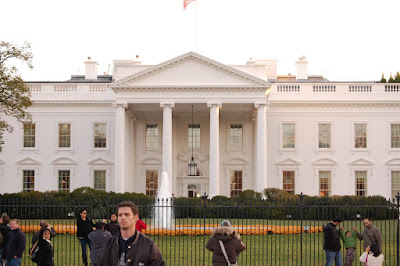
The White House: This is where the President lives.
The Lincoln Monument: A beautiful monument created to remember our 16th President, Abraham Lincoln, and his Emancipation Proclamation which ended slavery. He was the President during the Civil War.

Washington Monument: To remember our first President, George Washington.

Mount Rushmore: Mount Rushmore is in the Black Hills of South Dakota. Four of our presidents (George Washington, Thomas Jefferson, Theodore Roosevelt, and Abraham Lincoln) are carved into the mountain.

The Golden Gate Bridge in San Francisco is one of the largest suspension bridges in the world. It was the largest when it was built in 1937. It is a beautiful bridge and a symbol of San Francisco and the US.

Take this quiz about Landmarks
Check out this tour of Famous US Landmarks.
Here's just a taste of what we've learned about:
The Star-Spangled Banner, our national anthem, was written by Francis Scott Key in 1814, during the War of 1812. He wrote it while on a British boat, watching to see whether the British would overtake the Fort or whether the US would win that battle. He was overjoyed to see the flag still waving the next morning and to know the US had won the battle.

Our flag is made of 13 red and white stripes. These represent the 13 original colonies. The fifty stars represent the 50 states. We also talked a little bit about how to care for the flag and that it reminds us of the freedoms we enjoy.
The pledge was originally written by Francis Bellamy to celebrate Columbus Day. Several changes have been made to the original pledge (the original pledge said: I pledge allegiance to my flag and to the republic for which it stands, one nation, indivisible, with liberty and justice for all.) The pledge is a promise to stay true to our country. We talked about how to say the pledge correctly.
The Constitution and Bill of Rights are an important document that explains the government. They give laws and explain who has power within the government. They also explain the rights that we have as citizens.

The Liberty Bell

The Liberty Bell is a symbol of freedom. In the past it was used to announce important meetings and also to help bring the North and South back together again after the Civil War.
The Bald Eagle

The Bald Eagle is our national bird. It isn't really bald, but because most of its feathers are black and its head is white, it looks bald from a distance. The bald eagle was chosen as our national bird because it is strong, lives a long time and looks so regal. It reminds us of the strength of our nation.
Some of the landmarks we have learned about are:

The Statue of Liberty: a gift to the US from France

US Capitol in Washington D.C.: This is where the Senate and House of Representatives meet to make the laws for our nation.

The White House: This is where the President lives.

The Lincoln Monument: A beautiful monument created to remember our 16th President, Abraham Lincoln, and his Emancipation Proclamation which ended slavery. He was the President during the Civil War.

Washington Monument: To remember our first President, George Washington.

Mount Rushmore: Mount Rushmore is in the Black Hills of South Dakota. Four of our presidents (George Washington, Thomas Jefferson, Theodore Roosevelt, and Abraham Lincoln) are carved into the mountain.

The Golden Gate Bridge in San Francisco is one of the largest suspension bridges in the world. It was the largest when it was built in 1937. It is a beautiful bridge and a symbol of San Francisco and the US.

Take this quiz about Landmarks
Check out this tour of Famous US Landmarks.
Tuesday, November 2, 2010
Productive Thinking
In ELD, our wonderful ELP (gifted/talented) teacher comes in once each week to work with my group. We have been learning about productive thinking: coming up with many, varied, and unusual ideas. Our ELP teacher has done a number of fun things to get students working on being creative and using productive thinking. Today's activity was no exception.
First, she had students brainstorm a list of things that are circular. Then she showed how 2 or more circles can be combined to make a snowman, a stoplight and so on. Then she gave them the productive thinking task. She gave them a paper with four shapes. They were to add to these shapes to create pictures. They were to try to come up with several ideas and then choose the idea that they thought would be the most unusual and different. Many of them had some similarities, but there were so many creative ideas. Here are just a few examples of what they came up with:
The four original shapes:


The students' creations:

A toothbrush with toothpaste, a fish, a slingshot and a crayon

the flag (this was a very popular choice) and bowtie

I thought this was so clever. This student used two of the shapes to create a creature or robot. Sorry it is upside down.

cake (also upside down. Sorry!) door, bow and arrow

barbell, rainbow

German flag, dinosaur, design, and a girl looking at herself in the mirror
What clever children!
Subscribe to:
Posts (Atom)